
Home > Fireplace Blog > Mounting a TV above a Gas Fireplace
It's one of the most common questions many homeowners ask when building, renovating, or upgrading a fireplace: can I mount a TV above a gas fireplace?
The short answer is yes. But the longer answer, the one that actually matters, depends entirely on how the fireplace manages heat. Get that wrong, and you risk heat damage to expensive electronics over time. Get it right, and you create a clean focal point where the fireplace and television share the fireplace wall without competing for attention or space.
A fireplace and a TV above a fireplace can work together providing entertainment, ambiance, and warmth in a single room. Here's what you need to know before committing to the layout.
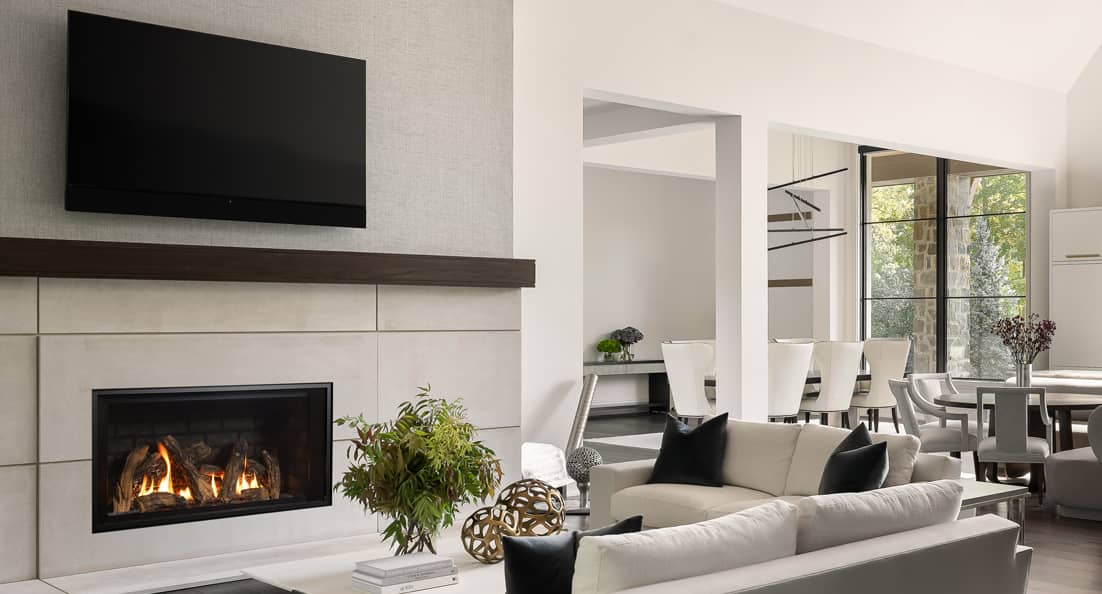
Why heat is the real concern?
The issue isn't the fire itself. It's convective heat which is the warm air that naturally rises from a gas fireplace and travels upward along the wall above it.
A typical gas fireplace produces between 20,000 and 35,000 BTUs of heat output per hour. That's a significant amount of fireplace heat, and physics dictates that a good portion of it moves straight up. Over time, that rising warmth raises the surface temperature of the wall directly above the hearth. If you hang a TV or mount a television in that zone without any heat management, you're exposing sensitive electronics to sustained high temperatures.
The heat damage isn't always immediate. It can show up gradually; dead pixels, shortened component lifespan, discolored bezels, or intermittent performance issues that are hard to trace back to excess heat exposure. Most television manufacturers rate their products for operating temperatures up to about 100 to 104°F. The wall above an unmanaged gas fireplace can exceed that easily, especially during extended use.
This is worth paying attention to because heat transfer between the fireplace and the space above it is constant whenever the fire is running. Even when the room feels comfortable at sitting height, the temperature near the mantel and above can be considerably higher.
This doesn't mean mounting a TV above a gas fireplace can't be done. It means the fireplace itself needs to be part of the solution and the right one can actually deflect heat away from the television entirely.
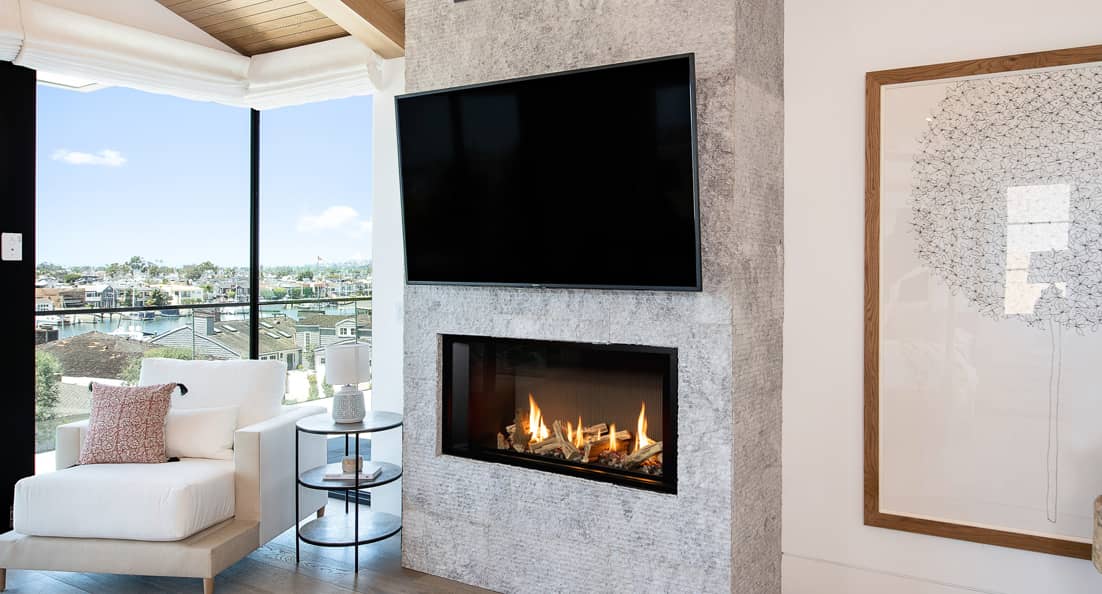
What most homeowners get wrong
The most common mistake is treating heat management as an afterthought. Many homeowners pick a fireplace based on appearance and heat output, install it, and then try to figure out how to protect the TV above the fireplace. By that point, options are limited.
A few specific missteps come up again and again.
Relying on a fireplace mantel alone. A mantel can deflect heat slightly, but it doesn't redirect it. The warm air simply wraps around the mantel edge and continues rising toward the television screen. Mantel height matters too, a shallow mantel at the wrong height does almost nothing to reduce heat damage to a TV mounted above. A mantel helps with style and can serve as a design feature, but it's not a heat shield and it's not a heat management system.
Assuming all fireplaces behave the same way. They don't. Gas fireplaces, wood burning fireplaces, and electric fireplaces each handle heat very differently. Among gas fireplaces alone, a sealed direct vent unit manages heat output differently from a ventless model or an older gas log set. Vented fireplaces lose some heat through the chimney, while ventless models push more warmth into the room and up the fireplace wall. Wood burning fireplaces generate the most excess heat and present the greatest risk to other electronics and televisions hung above. Electric fireplaces generally produce less heat and are often considered safer for a TV above a fireplace, but they still require attention to clearance specifications.
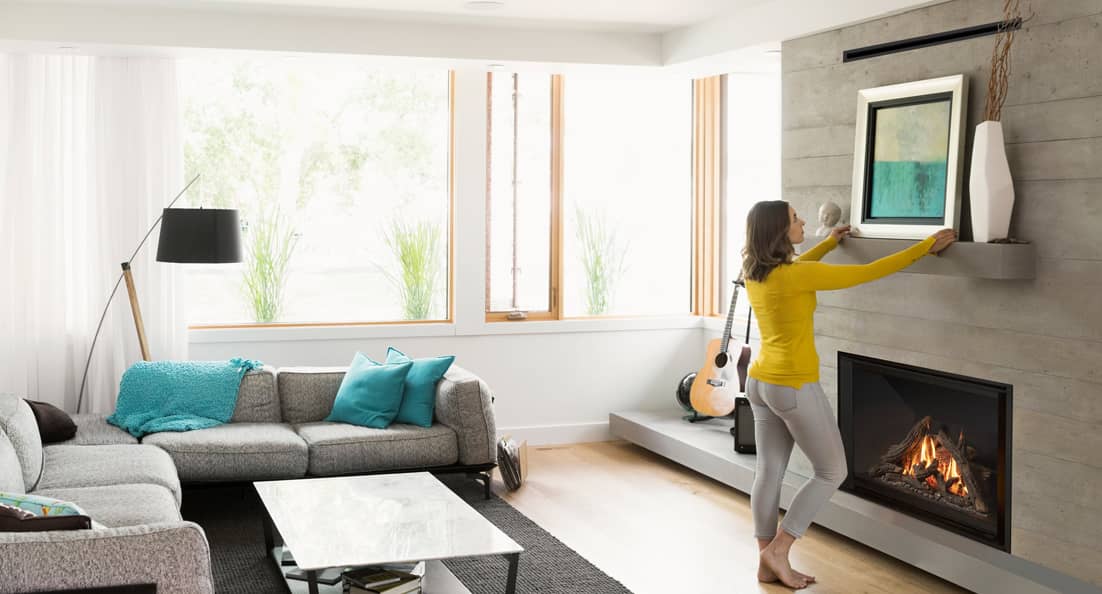
The type of fireplace you choose determines how much heat reaches the TV zone and whether you can hang a television above it safely.
Ignoring clearance specifications and the fireplace manual. Every fireplace has manufacturer-specified recommended clearances for combustible and heat-sensitive materials. Carefully read the installation manual before planning your mount. These aren't suggestions. They're engineering limits based on how that specific unit distributes heat. Ignoring them puts your TV at risk and can void the fireplace warranty.
TV size and viewing angle as afterthoughts. Many homeowners focus entirely on heat and forget about comfort. A television mounted too high above the fireplace creates neck strain and an awkward viewing angle. TV size matters here too. A screen that's too large or too small relative to the fireplace looks unbalanced and can make the room feel off. Planning the vertical space, mantel height, and TV placement together is essential to creating a layout that actually works for sitting and watching.
Adding protection after installation. Heat shields, aftermarket fans, and retrofit solutions exist, but they're band-aids. A heat shield can reduce some heat transfer to the wall, but it doesn't solve the underlying problem the way a built-in system does. Mounting brackets and heat shields installed after the fact are limited by whatever wall space and structure are already in place. The most reliable approach is to choose a fireplace with a built-in heat management system designed to work with a TV above it from the start.
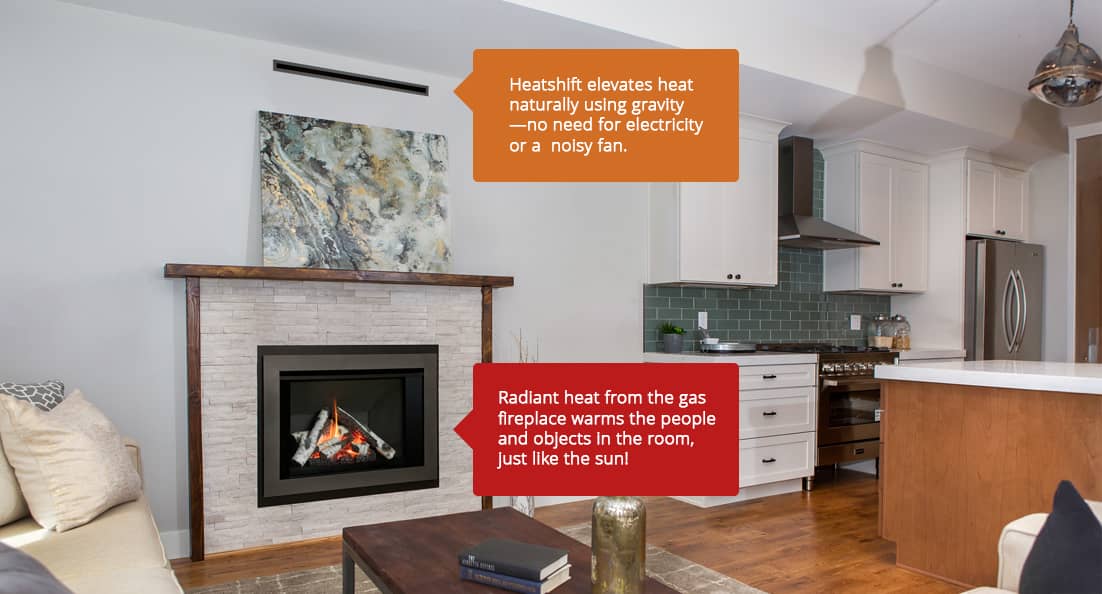
How built-in heat management solves the problem
The cleanest and most effective way to mount a TV above a gas fireplace is to choose a unit that was engineered with that layout in mind. This is an important consideration for anyone trying to save space by combining the fireplace and entertainment center on one fireplace wall.
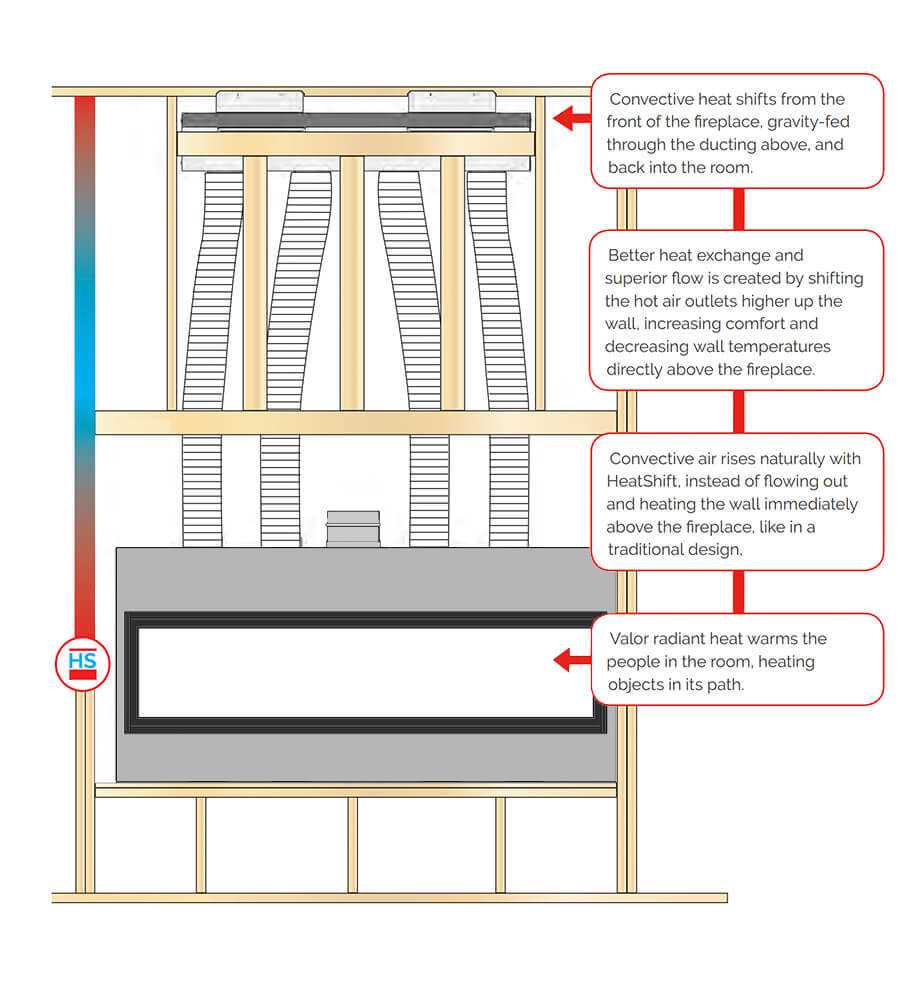
Built-in heat management systems work by intercepting convective heat before it reaches the wall above the fireplace and redirecting it back into the room. Instead of letting warm air rise uncontrolled up the wall toward your television and other electronics, these systems channel the heat through concealed ducts and release it at a higher elevation or through side outlets away from the screen and any furniture or cabinets nearby.
The result is a cooler wall surface directly above the hearth, which means heat-sensitive materials like drywall, wood finishes, stone surrounds, artwork, and electronics stay protected from heat damage.Not all heat management systems are created equal, though. Some require a fan, which introduces noise not ideal when you're watching your favorite shows with the fire on a few feet away. Some need electricity, which adds complexity and removes the ability to operate during a power outage. The best systems work passively, using gravity and natural convection to move heat without mechanical assistance.
How Valor HeatShift works
Valor's HeatShift system is a strong example of how this is done well. It's a passive heat management system that redirects convective heat upward through hidden ducts and releases it back into the room completely bypassing the fireplace wall and surface areas above the hearth.
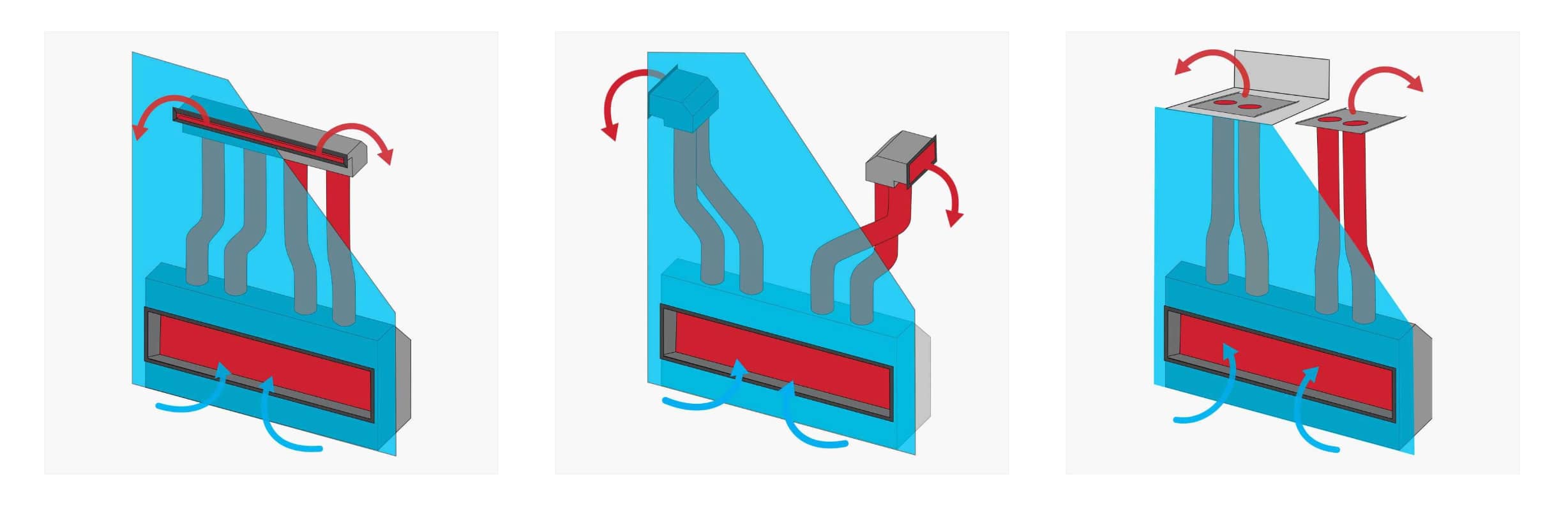
What makes HeatShift worth understanding is how it works without a fan or electricity. The system uses gravity and the natural tendency of warm air to rise. Hot air is captured inside the firebox area and channeled through a concealed plenum, then released at a higher elevation through a front wall outlet, side wall grilles, or a top valance depending on which installation option fits your design style.
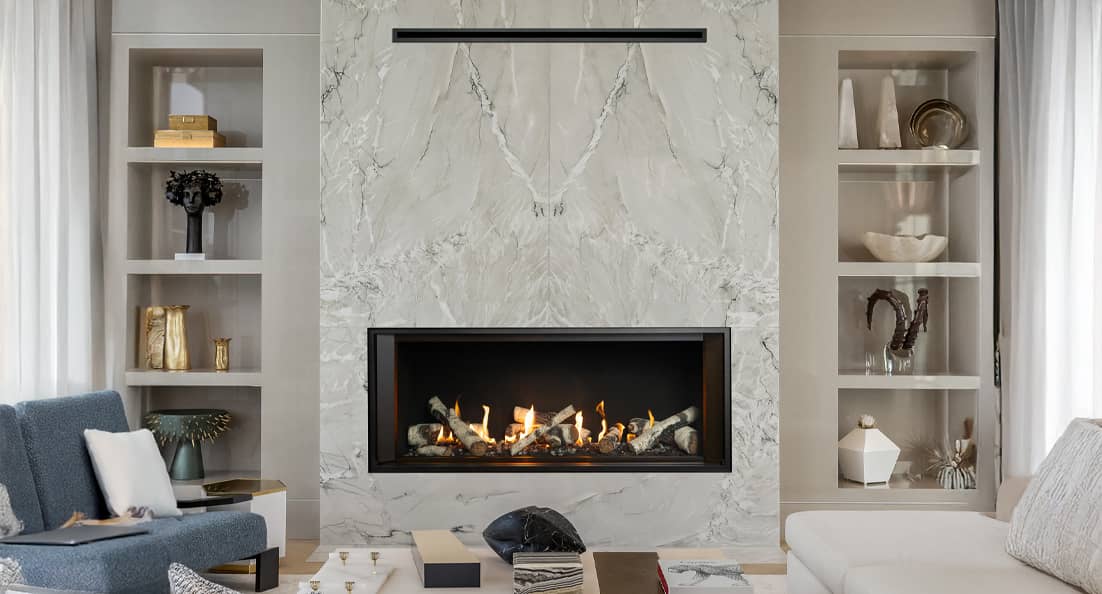
Three configurations are available. A front wall plenum (available in 38-inch and 48-inch widths) can be painted to match the room. Side wall grilles keep the front of the fireplace wall completely clean. And a top valance hides the outlet behind a built-in architectural detail creating a sense of intention in the design. Each option integrates into standard framing and uses normal construction techniques that comply with building codes across North America.
Because HeatShift operates without a fan, there's no noise to interfere with your TV audio or sound system. And because it doesn't require electricity, the fireplace can still function during a power outage, something Valor has built their reputation around. You can sit comfortably in front of the fire, enjoy warmth from the hearth, and watch a screen mounted directly above without worrying about heat damage to the television or other electronics in the cabinet.The practical benefit is straightforward: with HeatShift installed, you can run combustible wall finishes, drywall, wood, tile, stone right up to the fireplace surround and hang a TV directly above it. It gives homeowners the ability to create a true focal point where the fire and television sit together on one wall, with less heat reaching the space above and no compromise on ambiance or performance.
For homeowners who plan to extend the heat beyond the main room, Valor also offers HeatSplit, a companion system that distributes warmth to other areas of the home like bedrooms, hallways, or utility rooms. HeatSplit connects directly to the HeatShift plenum, giving you multi-zone heat management from a single fireplace and even less heat concentrated on the fireplace wall where the TV is mounted.
Which Valor fireplaces support a TV above
HeatShift is available on a range of Valor gas fireplaces, including the Linear series, multi-sided series, H6, H5, H3, and P2 models. Each model comes in many styles and configuration options, so the right fireplace depends on the room, the installation type, and whether you're building new or renovating.
One model worth highlighting is the LT2 direct vent gas fireplace. The LT2 was designed with HeatShift integration as a core feature, not an afterthought. It pairs a wide viewing area with Valor's V-Class burner and radiant heat technology, and it keeps walls cool enough to mount a TV directly above. For homeowners who want a fireplace that looks as good as it performs and that supports hanging a television above the hearth from day one, the LT2 is one of the strongest options in the lineup.
That said, the best model for your space depends on your room dimensions, design preferences, and heating requirements. Whether you plan to mount a large screen TV above the fire, hang artwork on one side of the fireplace, or build a full entertainment wall with shelving and a cabinet, an authorized Valor dealer can walk you through the options and help you match the right fireplace and HeatShift configuration to your specific installation.
Planning tips for your installation
If you've decided to mount a TV above your gas fireplace, a few practical considerations will make the process smoother and help you avoid the most common mistakes.
Plan the layout before installation, not after. Heat management systems like HeatShift need to be installed at the same time as the fireplace. They integrate into the wall framing and ductwork behind the unit. Retrofitting after the fact is either difficult or impossible, depending on the build. Map out your television placement, fireplace position, mounting brackets, and heat management configuration together from the start. Planning ahead also helps you save space and make the most of the available wall space in the room.
Follow manufacturer clearance specifications. Even with a heat management system in place, every fireplace model has specific recommended clearances. These dictate how close you can mount a TV, what materials can be used around the unit, and how the HeatShift plenum should be configured. Carefully read the fireplace manual and the television manufacturer's guidelines. Your dealer and installer will have these specifications on hand.
Think about viewing height, viewing angle, and comfort. A TV mounted too high above a fireplace creates neck strain and an uncomfortable screen angle. The ideal center of the screen should sit roughly at eye level when you're seated whether on a couch, chair, or even a coffee table height ottoman. If your fireplace design pushes the TV higher than you'd like, consider a tilting mount that angles the screen downward, or work with your designer to lower the overall mantel height and installation height. Getting the viewing angle right makes the difference between a room you want to sit in and one that feels off.
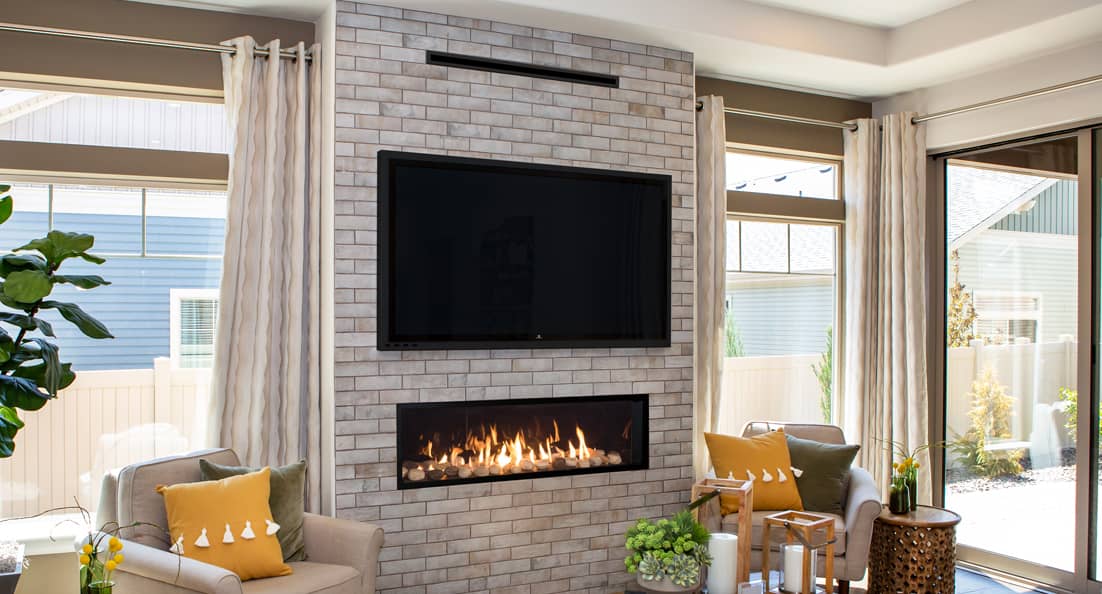
Account for cable management. Plan how power, HDMI, and other cables will route through the wall before anything gets installed. Running cables after the fireplace and TV are in place is far more disruptive. If you're running wires through the wall cavity near a gas fireplace or chimney, a professional electrician can ensure it's done safely and to code. Consider TV size relative to the fireplace. The television screen and fireplace opening should feel proportional. A TV that's significantly wider or narrower than the fireplace can create visual tension on the wall. Many styles of fireplaces pair best with specific screen sizes. Your dealer can help you plan the right balance so the TV and fire complement each other as a single focal point rather than competing for space.
Work with a dealer who understands the full picture. Installing a gas fireplace with a TV above involves framing, venting, heat management, electrical, and finish work. It's not a simple hang-and-go project. An authorized Valor dealer can coordinate the technical requirements and help your builder or contractor execute the installation correctly the first time. That support is especially important for homeowners who want to mount a television near a corner fireplace, in a room with limited wall space, or in a space where furniture layout makes viewing height critical.
The Bottom Line
Mounting a TV above a gas fireplace is absolutely possible but the fireplace has to be designed for it. The difference between a setup that works for years and one that potentially damages your television and other electronics comes down to heat management.
Choose a fireplace with a built-in system that redirects excess heat away from the wall. Plan the layout before installation. Follow the recommended clearances. Think about viewing angle, TV size, and mantel height together. And work with a dealer who can guide the technical details.
When the heat is handled from the start, a TV above the fireplace isn't a compromise. It's a design feature, which brings fire, entertainment, and ambiance together in the same space, on the same wall, without sacrificing style, comfort, or the life of your screen.
Table of Contents