
Home > Fireplace Blog > Gas Fireplace Parts
Most people never think about the parts of a gas fireplace until something stops working. The flame looks weak, the pilot won't stay lit, or the remote does nothing, and suddenly the inside of that sleek unit on the wall feels like a mystery. It doesn't have to be.
A gas fireplace is really just a handful of systems working together: a structure that holds everything in place, a gas and ignition system that creates the flame, a venting system that keeps the air safe, and a set of sensors and controls that manage it all. Once you can name the gas fireplace parts and picture what each one does, maintenance gets easier, troubleshooting gets faster, and shopping for a new unit gets a lot less intimidating.
This guide walks through the components in three plain-language groups: the structure and finish, the parts that make it run, and the safety devices and controls. If you want the bigger picture of how these pieces fire up together, our breakdown of how a gas fireplace works is a useful companion read.
The Structure and the Finish
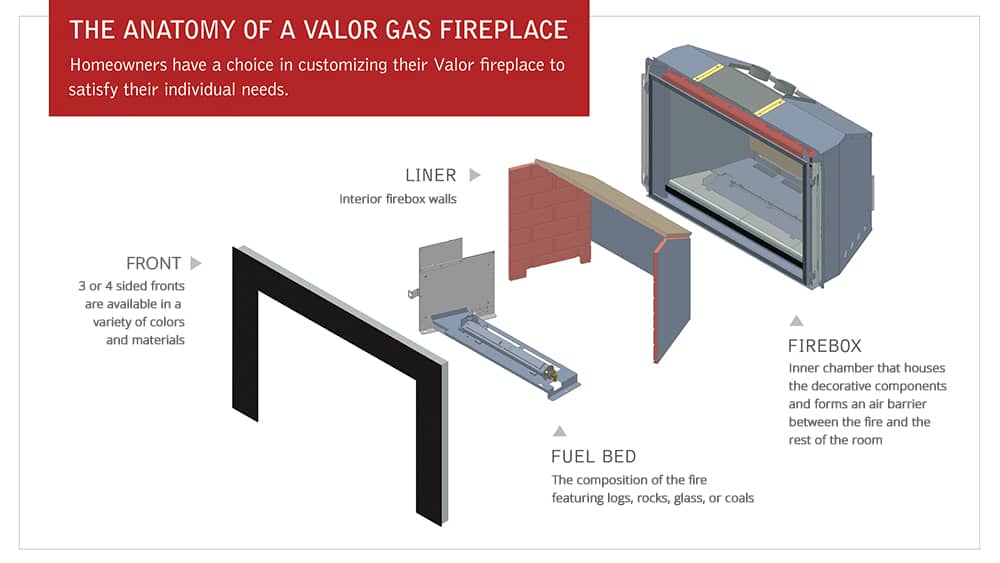
These are the parts that give the fireplace its shape and its finished look. Some are purely decorative. Most do double duty, shaping the appearance while also handling heat or holding the unit together. A couple of them, like the liner box, disappear into the wall once the unit is installed, but they're worth knowing because they're the foundation everything else attaches to.
The Liner Box and Firebox
Start from the outside and work in. The liner box is the outermost structural shell. It contains the firebox and every internal part, and it's usually made of galvanized steel so it resists rust and lasts. You won't see it once the fireplace is installed, since it sits hidden inside the wall framing.
Inside the liner box sits the firebox, the inner chamber that houses the decorative components and forms an air barrier between the fire and the rest of the room. Any visible portion of the firebox is painted black, both for looks and to disappear behind the flames. Together, these two pieces are the bones of the fireplace.
The Window
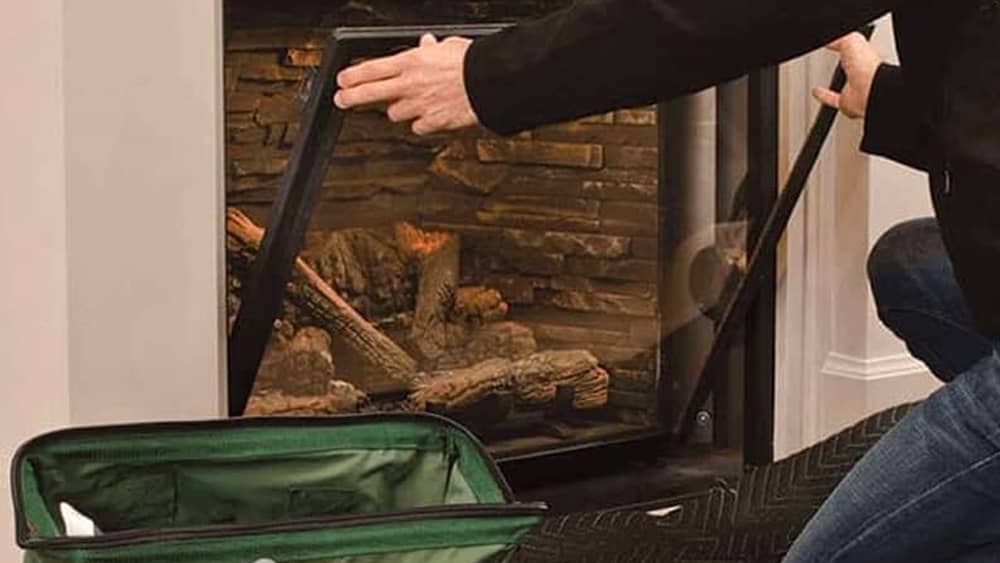
The window is the glass front that lets you watch the flames while sealing the firebox off from the room. Not all glass is equal here. Many fireplaces use plain tempered glass, but premium units use ceramic glass, which radiates far more heat back into the room instead of trapping it inside the firebox. That difference is a big reason some fireplaces feel noticeably warmer to sit near. Because the glass gets hot during operation, it's shielded by a mesh barrier that's typically built into the front.
Firebox Liners and the Fuel Bed
The firebox liners are the ceramic or glass panels lining the inside of the firebox. They look good, but they also help radiate heat toward the front of the unit, so they earn their place.
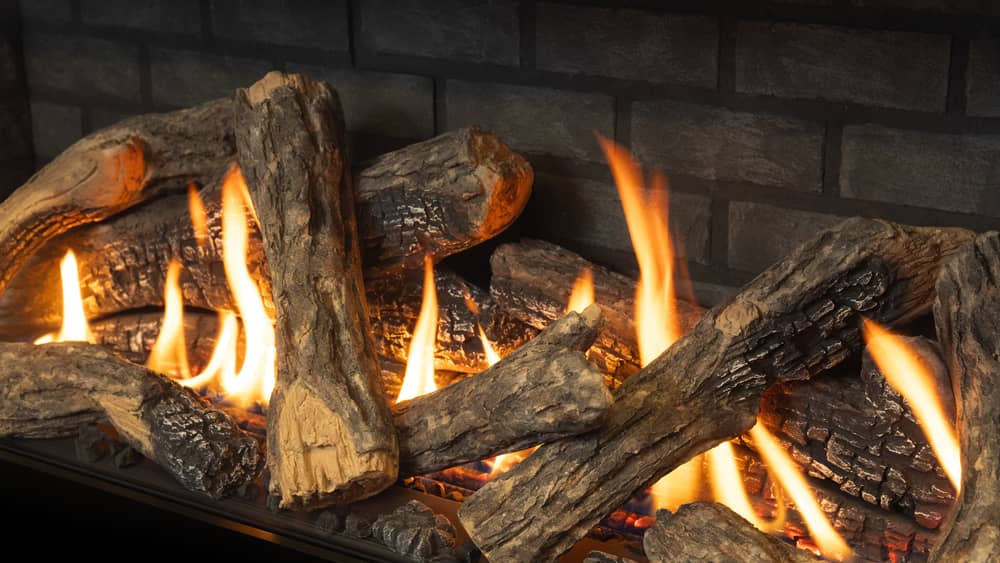
The fuel bed is the part most people actually notice. It's the collection of ceramic or glass pieces designed to mimic real burning material, and it does more to define a fireplace's character than almost anything else. Styles range from traditional logs and driftwood to birch, splitwood, coal, stone-and-log kits, and modern Murano glass. One thing worth knowing before you fall in love with a look: not every fuel bed style is available for every model, so it's smart to confirm options for your specific unit. If you're weighing the choices, our guide on how to choose gas fireplace logs covers how material and style affect both flame appearance and heat.
Front and Backing Plates
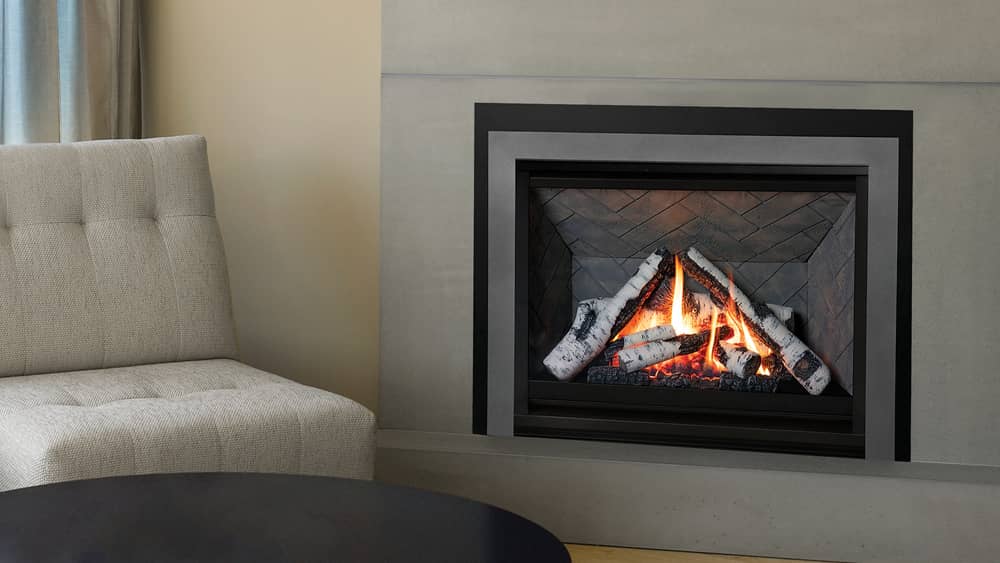
The front is the decorative face of the fireplace and the most visible part when the unit is off. It gives the installation a finished look and includes a barrier screen that protects fingers and objects from the hot glass.
Behind it, the backing plate does quieter work. It covers the gap between the fireplace and the surrounding wall or masonry opening, and it gives the front something to anchor to. It's a small detail that makes the difference between a clean install and a sloppy one.
The Parts that Make a Fireplace Run
Now for the working system. These are the components that turn gas into a controlled flame and move heat into your room. This is also where most service calls start, so knowing the names pays off.
The Gas Valve
The gas valve is the workhorse of the gas system. It regulates the flow of gas to both the pilot and the main burner, and it governs ignition. Nearly every other part of the gas system connects back to it, so when a fireplace won't light or won't adjust, the valve is often involved.
The Pilot Light and Ignition System
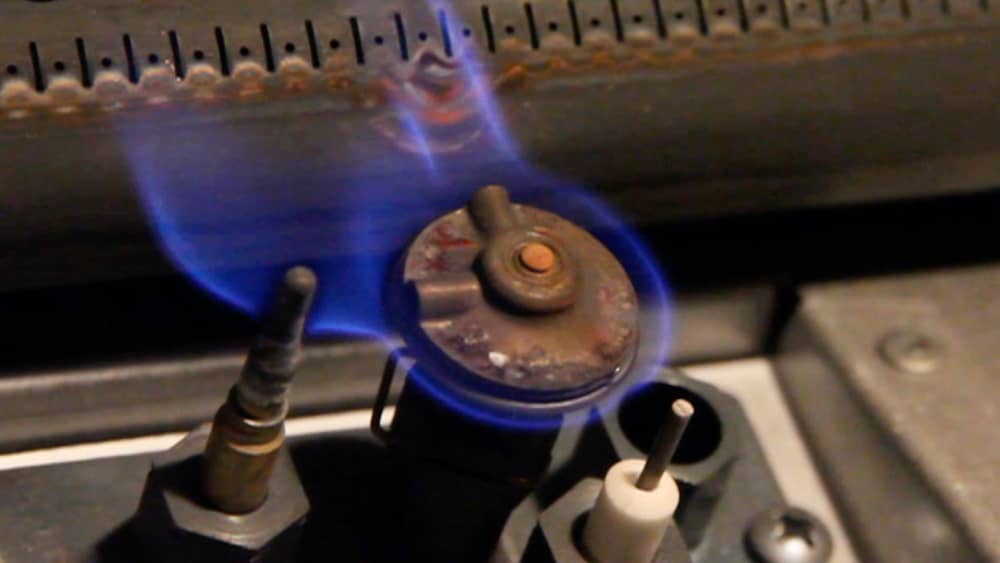
The pilot light is the small, steady flame near the burner that provides the ignition source. When you turn the fireplace on, the pilot lights the main burner.
How that pilot gets lit, and whether it stays lit, depends on the ignition system. There are two common types, and the difference matters for both convenience and running cost. A standing-pilot, or millivolt, system keeps the pilot burning continuously and can operate without household electricity. An electronic, or intermittent pilot (IPI), system lights the pilot only on demand, which saves gas the rest of the time. Lighting the pilot itself is the job of the igniter: a piezo igniter fires a spark when you press a button, while an electronic spark igniter does it automatically when the unit switches on.
The Burner and Burner Ports
The burner is where the flame actually lives. In many units it's bundled with the pilot assembly, valve, and other controls into a single burner module, but the burner is the working core. Along its length sit the burner ports, the small holes that release the gas for ignition. Clean ports produce an even, full flame. Clogged ports cause weak or uneven flames, which is one of the most common reasons a fireplace stops looking its best and a good argument for regular gas fireplace maintenance.
The Venting System
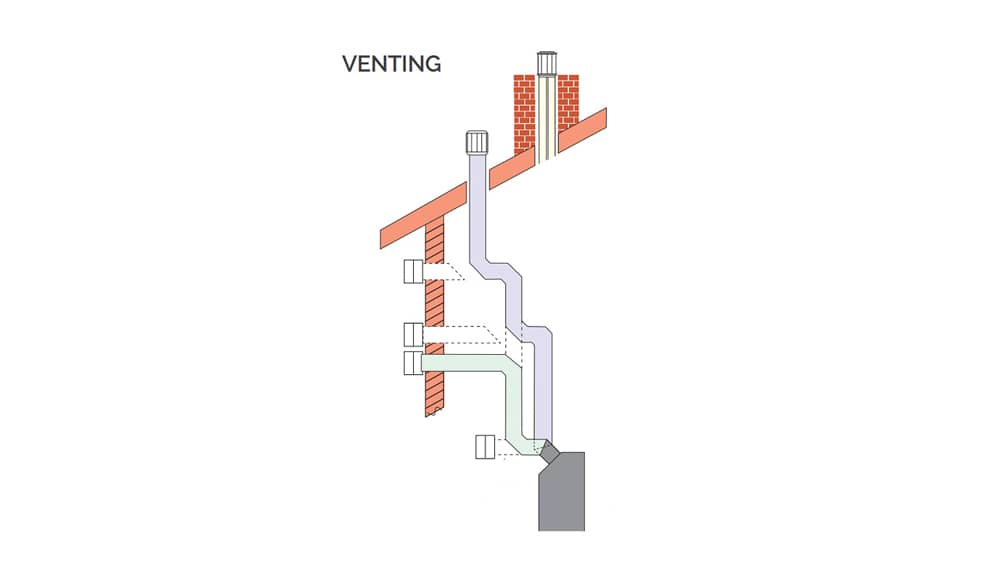
Burning gas produces exhaust that has to leave the home, and the venting system handles that. The type you have shapes how the whole fireplace breathes. A direct vent system uses a sealed co-axial pipe, one pipe inside another, to pull combustion air from outside and push exhaust back out. A B-vent, or natural vent, system exhausts upward through a flue and draws its air from the room. A ventless, or vent-free, system has no venting at all and burns within the room, relying on very clean combustion. Availability is limited across North America, though.
Ventless units aren't permitted in Canada at all, and several US states and cities, including California and Massachusetts, ban them outright, so always check your local codes before considering one. It's also why every Valor fireplace is a vented design.
Two smaller parts connect the fireplace to that system. The vent collar is the adapter that links the unit to the venting, whether the install uses rigid co-axial or flexible co-linear pipe. The termination cap is the exterior fitting where the vent exits the building, letting exhaust out (and on direct-vent systems, letting fresh air in) while keeping rain and debris from getting in. If you're trying to figure out which system suits your home, our gas fireplace venting guide compares all three in detail.
The Heat Exchanger and Blower
A couple of components exist purely to get more warmth into the room. Some units include a heat exchanger, which transfers heat from combustion into the room air without exposing you to flame or exhaust, and its design has a real effect on efficiency. Not every model has one, though. Many radiant fireplaces deliver heat directly through the firebox and ceramic glass without a separate exchanger. The blower, or fan kit, is an optional fan that pushes heated air out more actively. It's common, though many radiant models heat beautifully through natural convection without one. If you want to understand why radiant warmth feels different from forced air, radiant heat is worth a look.
Safety Devices and Controls
This last group keeps the fireplace safe and puts you in charge of it. These parts are small, but they're the reason a gas appliance can sit in your living room with confidence.
The Thermocouple and Thermopile
The thermocouple is a safety sensor that detects whether the pilot flame is actually lit. If the pilot goes out, the thermocouple cools, stops generating its tiny current, and signals the gas valve to shut off, which prevents unburned gas from escaping into your home.
The thermopile is a bundle of thermocouples that generates a stronger current from the pilot's heat. In a millivolt system, that current is enough to open the main gas valve and power a wall switch, thermostat, or remote without any household electricity. This is why a standing-pilot fireplace can keep running during a power outage. It isn't the only way to stay warm when the grid goes down, though. Many electronic-ignition units instead rely on battery backup to keep working, which is the approach behind features like Valor's heat during a power outage capability.
The Flame Sensor and Oxygen Depletion Sensor
The flame sensor confirms that the main burner has truly ignited and shuts off the gas if it detects no flame, stopping gas from building up. The oxygen depletion sensor (ODS) is specific to ventless fireplaces. Because those units burn inside the room, the ODS monitors oxygen levels and shuts the fireplace down if they drop too low. If your unit is vented, you won't have an ODS, and that's expected.
Standoffs
The standoffs keep the hot exterior of the fireplace a safe distance from anything combustible, like the wood framing around the opening. You won't see them once the unit is installed, but they're a core safety component, and they're the reason a gas fireplace can sit safely inside a finished wall.
Switches, Thermostats, and Remotes
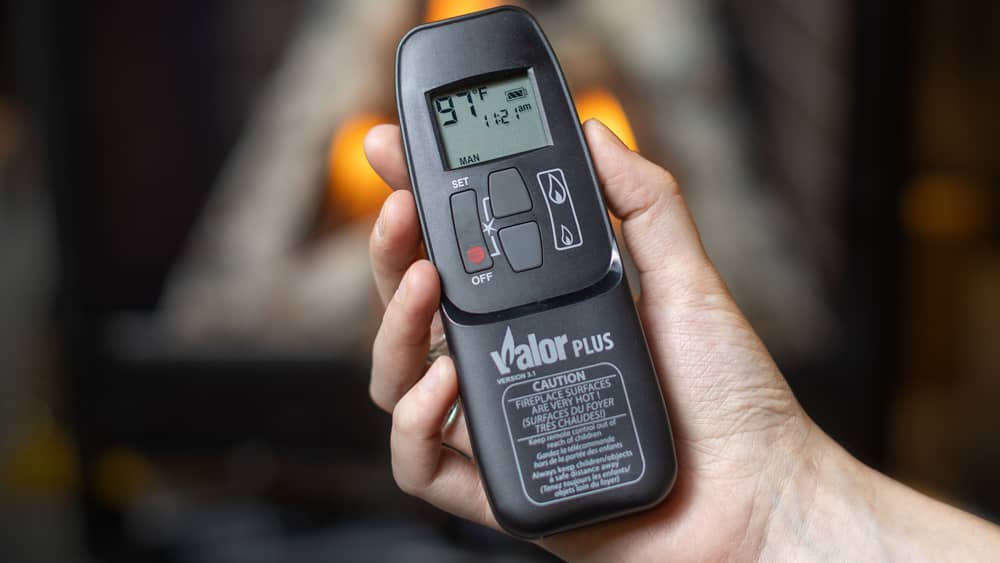
The everyday controls are the wall switch, thermostat, and remote, paired with a receiver that translates their signals into commands for the gas valve. This is how you turn the fireplace on, set a temperature, or adjust the flame from the couch. Modern systems add app control and timers on top, and our overview of remote controls and accessories covers the options.
Quick Reference: Gas Fireplace Parts at a Glance
Here's the short version, grouped by job:
- Liner box: outer steel shell that holds everything
- Firebox: inner chamber that houses the fire and seals it from the room
- Window: glass front, ceramic on premium units for more radiant heat
- Firebox liners: decorative panels that also radiate heat forward
- Fuel bed: the logs, coal, or glass that create the look
- Front and backing plate: the finished face and the piece it anchors to
- Gas valve: regulates gas flow and ignition
- Pilot light and ignition system: start the main burner (millivolt or electronic)
- Igniter: sparks the pilot, by button or automatically
- Burner and burner ports: where the flame is produced
- Venting system: direct vent, B-vent, or ventless, with vent collar and termination cap
- Heat exchanger and blower: move more warmth into the room
- Standoffs: keep heat a safe distance from combustible framing
- Thermocouple and thermopile: confirm the pilot and power the valve
- Flame sensor and ODS: shut off gas if something is wrong
- Switch, thermostat, remote, receiver: how you control it all
Knowing these gas fireplace components turns a sealed black box into something you can actually understand, maintain, and shop for with confidence. You don't need to be a technician. You just need to know what's working behind the glass.
If you're ready to see these parts come together in a real unit, find an authorized Valor dealer near you to compare models and get expert advice for your home.
Table of Contents